
What is root canal treatment?
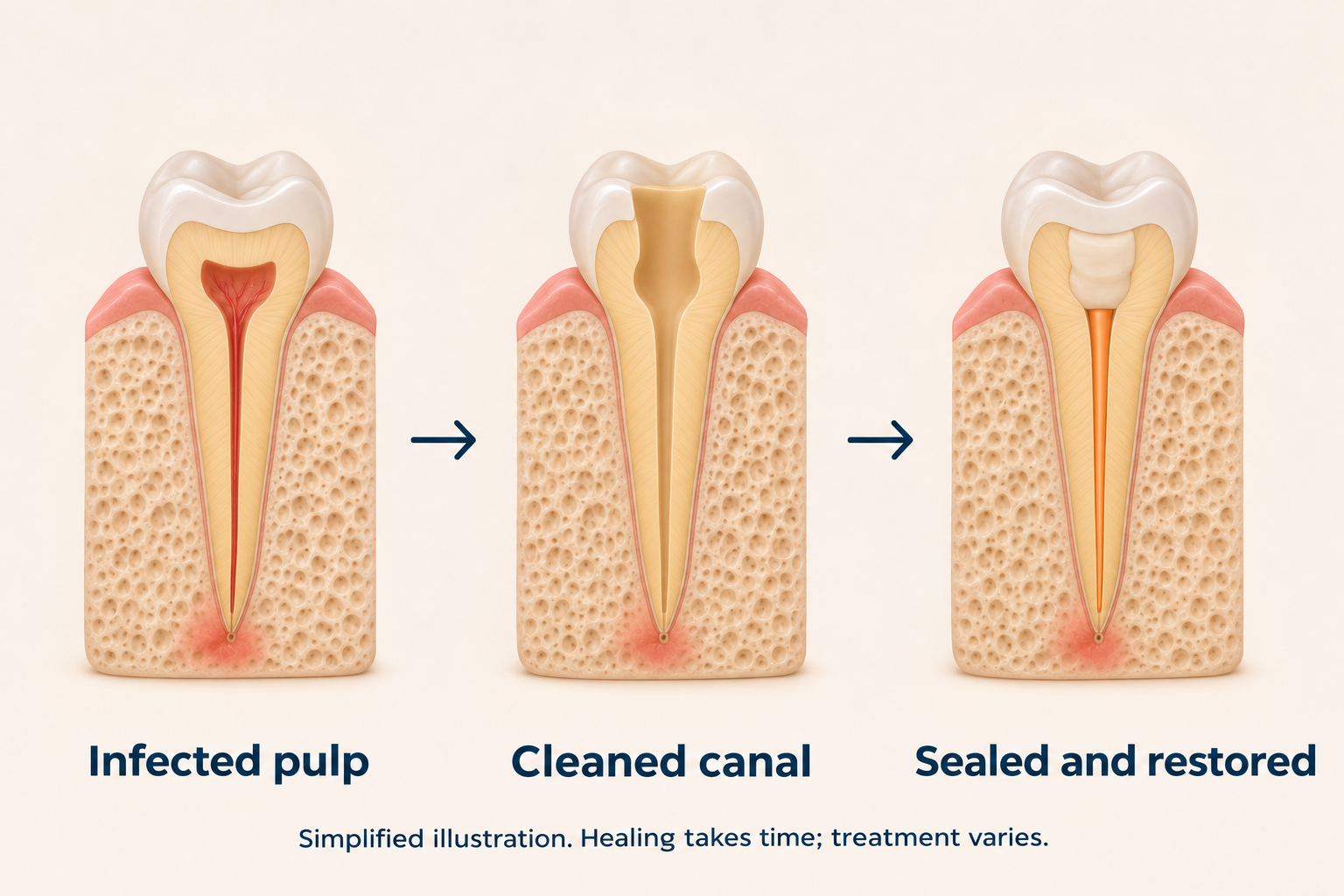
Root canal treatment removes inflamed or infected tissue from inside a tooth, then cleans and seals the root canals. The aim is to retain a tooth that can be restored.
Assessment and treatment steps
Toothache, lingering sensitivity or swelling needs a dental assessment. Symptoms alone cannot confirm whether you need root canal treatment. Examination and X-rays help your dentist plan care.
- Local anaesthetic is usually given.
- The affected tissue is removed and the canals are cleaned.
- The canals are filled and sealed.
- The tooth receives its final restoration; a dental crown may be recommended.
More than one appointment may be needed.
Comfort and recovery
Anaesthetic helps control discomfort during treatment. Tell your dentist if you feel pain so they can assess and adjust pain control. Tenderness afterwards can occur.
Follow your aftercare instructions. Avoid hard chewing on the treated tooth until it is fully restored. Contact the clinic for severe or persistent pain, visible swelling, an uneven bite or a lost temporary filling.

Risks and alternatives
A treated tooth can still fracture or develop new decay or infection. Further treatment, specialist care or extraction may be needed. If the tooth cannot be saved, your dentist can discuss removal and replacement options.
Complete the final restoration, keep the tooth clean and attend follow-up visits. Its outlook depends on the remaining tooth, restoration and ongoing care.

Fees, subsidies and questions
Ask for a treatment estimate that includes the final filling or crown. See our subsidies guide and check eligibility with the clinic.
Does treatment guarantee that I keep the tooth?
No. Root canal treatment aims to save the tooth, but its condition and response to treatment affect the outcome.
Sources and information
General information only. Your dentist will advise on your individual care. Sources checked 9 November 2026.